

Quick answer
There is no general public access to Niihau, and entrance is listed at 0 USD because no admission is sold — the island is private property, closed every day of the week. The only lawful visits are pre-booked excursions run by authorized operators, typically departing Kauai. Landings on the island itself remain rare; most trips stay offshore in Niihau's waters.
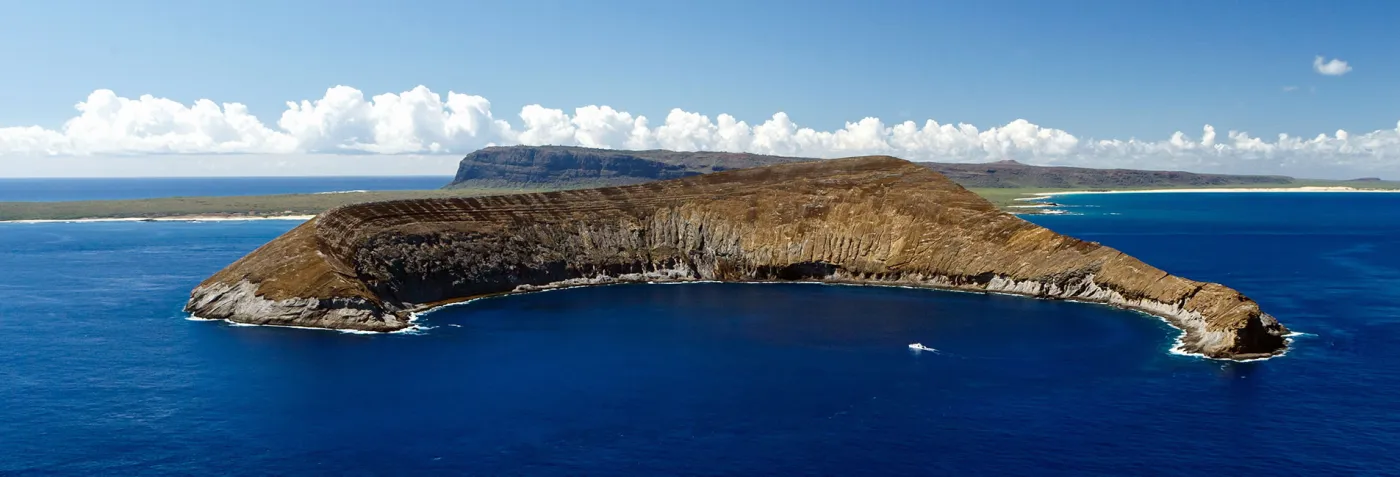
Niihau is the only Hawaiian island that has never had a public road opened to outsiders. Elizabeth Sinclair bought it from Kamehameha V in 1864 for ten thousand dollars in gold, and her descendants, the Robinson family, still hold the title. That single transaction explains almost everything a traveller needs to understand. The island's roughly seventy square miles, its village at Puuwai, its dry leeward plain and its brackish Halulu Lake are not withheld by a park authority that might one day change policy. They are withheld the way a ranch is withheld. Hawaii's fourth-largest inhabited island answers to a deed rather than a visitor bureau, which is why the question of how to visit Niihau resolves differently from every other island in the chain. The practical consequence is that the Forbidden Isle has no opening pattern at all. Every day of the week reads as closed, because closure is the permanent condition rather than a schedule. No fee exists because nothing is sold at a gate. What does exist is a narrow set of authorized excursions, and these are the only lawful route for an outsider. Operators licensed by the landowners run offshore trips into Niihau's waters, generally leaving from Kauai's west side, and a Niihau boat tour of this kind spends its time along the coastline, at anchor over reef, or crossing the Kaulakahi Channel rather than walking through Puuwai. Travellers who arrive expecting to wander a village are working from a misunderstanding. The roughly two hundred residents speak Hawaiian as a first language and live without the infrastructure that tourism assumes, and their privacy is the point of the arrangement. The Na Pali Coast enters here as geography rather than as a route. Many visitors first hear of Niihau while standing on a Kauai catamaran beneath the Kalalau cliffs, watching the island's flat profile sit on the horizon past Polihale. The two destinations share operators, weather windows and the same summer swell logic, so research into Na Pali Coast landmarks tends to surface Niihau crossings alongside them. They are not, however, the same trip. Na Pali sea caves and Nualolo Kai are Kauai's coast; Niihau is a separate island under separate ownership, reached across open water that can turn rough with little warning. Confusing the two is the most common error in planning. What to do with this answer is straightforward. Treat availability, not price, as the limiting factor, since authorized departures are few and weather-dependent. Confirm that any operator holds genuine permission from the landowners rather than merely advertising the name. Expect the itinerary to be marine — snorkelling, dolphin sightings, the clear water the island is known for — and expect no guarantee of setting foot on land. Hunting safaris and helicopter charters run by the estate exist separately and follow their own rules. Anyone researching how to visit Niihau should also accept that a cancelled crossing is normal rather than exceptional, and build a Kauai itinerary that survives one. The island's famous shell lei, strung from tiny momi and kahelelani shells gathered on its beaches, can be seen in Kauai galleries year-round. For most travellers, that and a boat's-eye view of the coast is the whole of the encounter, and it is the encounter the island permits.
“Niihau answers to a deed rather than a visitor bureau, which is why closure is a permanent condition rather than a schedule.”
How to Visit Niihau via Authorized Boat Tours
Niihau is a private island with no public access for independent travelers. The only way to visit is by booking a tour with an authorized operator departing from Kauai.
Departure from Port Allen Small Boat Harbor, Kauai
Departure from Kikiaola Small Boat Harbor, Kauai
Step-by-Step Guide on How to Visit Niihau
Niihau is private property with no general public access, so a visit means booking a seat with an authorized operator well ahead of your trip. Expect the research and booking sequence to take a few weeks from first enquiry to a confirmed reservation, since departures are limited and sell out early.
Identify authorized operators
Only a small number of operators hold permission to run Niihau tours, and independent boats cannot land or approach freely. Start by confirming an operator's authorization rather than assuming any Kauai charter can take you.
Confirm the tour type
Ask whether the trip is a boat-only coastal cruise or includes a landing, since the two are entirely different experiences. Many travelers book expecting to set foot on the island and discover too late that their tour stays offshore.
Check departure availability
Departures do not run on a fixed daily schedule, so check which dates the operator is actually sailing before you fix flights or accommodation. The most common error is choosing a travel date first and then hunting for a tour to fit it.
Reserve your seat early
Complete the booking through the operator's official channel or the booking pages on this site. Capacity is small, so waiting until you arrive on Kauai usually means no seats remain.
Provide passenger details
Submit full names, ages, and any mobility or medical notes at the time of booking. Operators use this for manifest and safety requirements, and missing details can hold up your confirmation.
Reconfirm before departure day
Contact the operator in the days before your trip to verify the sailing still stands, as conditions can cancel a departure. Ask what happens to your reservation if the trip is called off so you know your options in advance.
Entrance Fees and How to Visit Niihau Affordably
Niihau is private property with no general public access, meaning there are no standard entrance fees. All costs are exclusively determined by commercial tour operators authorized to visit the area.
The entry fee is 0 USD, but visitors must pay commercial tour rates which vary based on the selected authorized operator.
Understanding Operating Hours for How to Visit Niihau
Niihau is private property with no general public access or standard operating hours. All visitation must be arranged through authorized tour operators.
| Monday | Closed | |
|---|---|---|
| Tuesday | Closed | |
| Wednesday | Closed | |
| Thursday | Closed | |
| Friday | Closed | |
| Saturday | Closed | |
| Sunday | Closed |
Best Time of Year for How to Visit Niihau
The most favorable time to visit the region is during the summer months when sea conditions are calmer. Winter swells frequently disrupt maritime access, making late spring and early autumn the most reliable windows for transit.
Summer (June–August)
LowCalm seas, 75°F to 85°F. Stable conditions allow for smoother boat crossings to the area.
Winter (December–February)
LowHigh swells, 65°F to 75°F. Rough ocean conditions often force cancellations of scheduled tours.
Spring/Fall (April–May, Sept–Oct)
LowModerate, 70°F to 80°F. These shoulder months offer a balance of settled weather and accessible waters.
Verdict: The best period for potential access is during the summer months, specifically between June and August, to minimize the risk of weather-related cancellations.
Rules and Etiquette for How to Visit Niihau
Niihau is private property and home to a small Native Hawaiian community whose language and way of life remain largely intact. Visitor conduct on authorized tours is what keeps that access possible.
Do
- Treat the island as a private residence, not a public destination
- Stay with your guide and within designated shoreline or beach areas
- Follow every instruction from the authorized operator without argument
- Ask before photographing anyone, and accept a refusal quietly
- Carry out everything you bring ashore, including food scraps
- Learn a little about Niihau's history and Hawaiian language beforehand
Don't
- Do not attempt to reach residents' villages or homes on foot
- Do not photograph residences, livestock pens, or private structures
- Do not collect Niihau shells, coral, rocks, or plants
- Do not approach monk seals, sea turtles, or nesting seabirds
- Do not bring drones, pets, or outside soil and plant material
- Do not post location details that encourage unauthorized landings
Check availability
Frequently asked questions about how to visit Niihau
Everything you need to know about how to visit niihau